Before I launch into all the details on these incredible free 10th grade homeschool curriculum options, you might want to read my perspective and background, first. TLDR version: I’m familiar with what’s being taught in public schools, in private schools, and what’s available in homeschool curriculum.
You probably know that homeschool can be pretty expensive if you don’t know where to look. But you don’t have to buy a huge, expensive boxed curriculum or join a pricey online school. The truth is, there are some really great resources out there that won’t cost you anything.
Note: I’m basing this 10th grade plan on Tennessee state requirements for graduation. At the time of this post, that included 4 credits each of math and English, 3 credits each of science and social studies, 2 credits of foreign language, and a smattering of fine arts, health/PE, personal finance, and electives. Please consult your homeschool umbrella or other consultant before making final class choices! Not all states are the same.
More like this: How to homeschool for free, 9th grade curriculum
Math (2 semesters, 1 credit)
Khan Academy has an incredible range of math classes for students in high school. You’ll likely be looking at Algebra or Geometry for 10th grade, but they have classes all the way through AP/College Statistics and multivariable calculus. Each unit has a video lessons, practice problems, and quizzes. It’s all self-paced and a great option for students who are able to learn from video and pace themselves to finish on time without a huge amount of oversight from mom.
English (2 semesters, 1 credit)
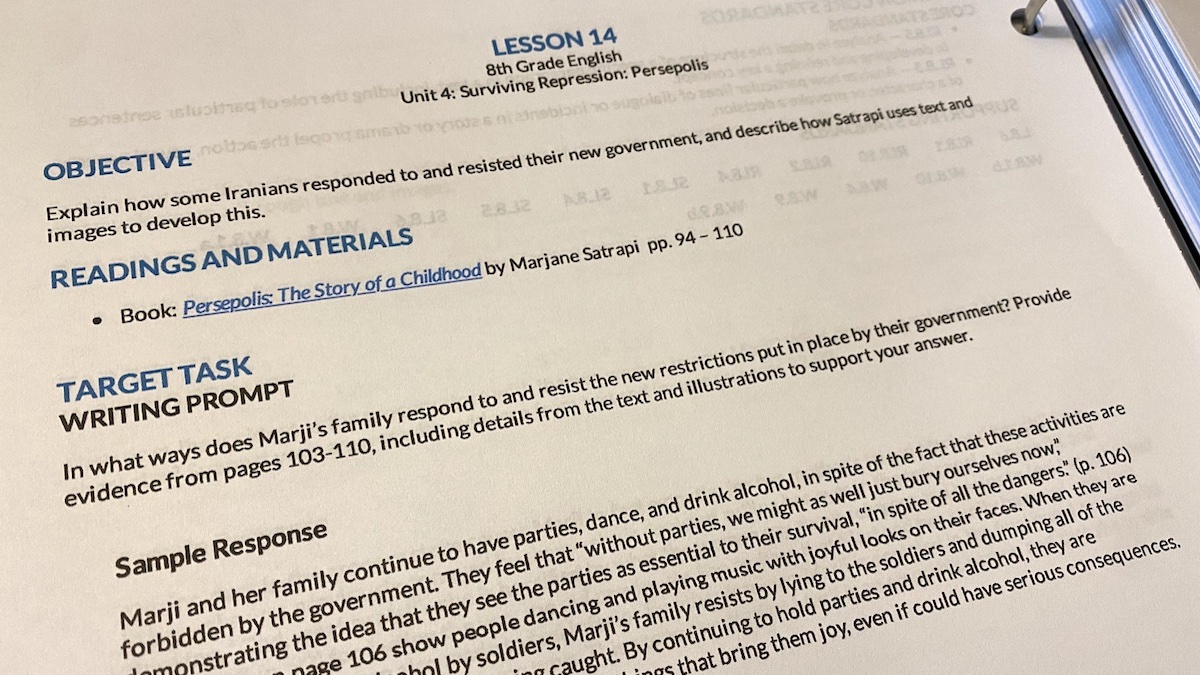
There are so many incredible books in the world, and it can be daunting to put together a list that covers everything. One of my favorite ways to build an English class reading list is to check my local schools to see what books they’re reading and to look online at packaged curriculums to see what they include in their books. My favorites are Beautiful Feet, Memoria Press, Brave Writer, or Tapestry of Grace. Or, you can use my own selections for the 10th grade World Literature course I teach at our tutorial, along with some of the free unit plans I’ve posted here.
Once I have my book list nailed down, I head over to Fishtank Learning or Common Lit. Both sites are built for public school teachers and have seemingly endless resources. You can search by book, by grade, or (on Common Lit) by genre to find teaching aids for the texts you want your child to read. Both have really nice suggestions for paired readings to go along with your main texts. You can also frequently find teaching guides available for free from the publisher; just Google the book title, publisher name, and “teaching guide” or “teacher resources” and you’ll likely find some really good resources.
For the writing component, I’d recommend they write one narrative essay, one persuasive essay, and one literary analysis essay based on a novel they read. You can google “10th grade essay grading rubric” and so on for some really great resources to help your student know what’s expected in their paper.
More like this: How to read “Sense and Sensibility” along with the BBC miniseries
Science (2 semesters, 1 credit)
I think science classes are one of the hardest to do from home if you’re trying to incorporate labs, which most colleges will want on a student’s transcript. Most schools recommend (read: require) Chemistry for their 10th grade students, and Khan Academy has several Chemistry class options. I’d recommend their AP/College Chemistry course. They also have a complete Chemistry Library of resources to help struggling students. Another option is Carnegie-Mellon’s free and open General Chemistry 1 course. If your student likes it, they can go on to Chemistry 2.
I am not a science teacher, nor am I a science-minded person. To me, the importance of the labs is for the students to learn the scientific method (something you can easily teach by googling it) and that they learn to write a lab report. Check your local library or used bookstore for a copy of the Student Lab Report Handbook by John Mays. It’s a great resource on writing lab reports that will last them through all of high school.
To complete the labs, get creative. You can do many of them virtually online (this is how most of my daughter’s labs were done at her top ranked public school, FYI), get a group of friends to meet together once a month for a fun Chemistry Lab Day, or ask your co-op to offer a lab-only companion to Chemistry class. A friend who teaches HS science at our nearby college-prep private school says 8-10 labs per year is plenty.
History (0 credits)
In Tennessee at the time of this writing, a student needs 1 World History, 1 US History, and .5 Government/.5 Economics for graduation. Typically, they’d do World History freshman year, US History junior year, and Gov’t/Econ their senior year, leaving their sophomore year free to look into other electives.
Foreign Language (2 semesters, 1 credit)
My kids have been lucky enough to get excellent Spanish instruction from a native speaker at our co-op, but if that’s not available to you there are still plenty of other great options. Check your local library for access to free language courses online. Set your child up with 30 minutes of free DuoLingo every day, and supplement with a conversation group in your community. Check out Spanish language books at the library, watch Spanish language shows, and listen to Spanish language music. (And, of course, you can fill-in-the-blank with whatever language your child has chosen. Mine did a short stint learning Korean, and we really enjoyed the resources from Go! Billy Korean.)
More like this: How I taught middle school Geography at our homeschool co-op
Personal Finance (1 semester, 0.5 credits)
Personal Finance is a required one-semester credit in Tennessee. I printed off the Tennessee state standards for this course, and found that it is almost completely covered through the BSA merit badge for personal management. Our plan is to have our son finish this merit badge since he’s a scout anyway, and then complete the few extra items he didn’t do that are found in the state standards.
That said, we were very happy with the Beyond Personal Finance course that our older son took, although it is not a free option. Another option is Everfi’s financial literacy lessons, which are free to high school teachers.
Electives
I like to have my high schoolers do at least one elective each year, of their choosing. To qualify for a full credit, your child should spend 150 hours in this subject. Here are some ideas for you:
- join a theater group and participate in a play — Fine Arts
- take a cooking class at your community center, or have your child plan and prepare meals once a week for the year — Culinary Arts
- have a weekly movie night where you watch through the AFI top 100 list and learn about the history of movies — American Film Studies
- read Tim Keller’s The Reason for God and The World’s Religions by Huston Smith — World Religion
- choose any of the BSA merit badges and create an elective around that (you don’t have to be a scout to use these resources!)
- If they are involved in an extracurricular, use that experience! One friend created an “Outdoor Leadership” course based on her son’s 2 high adventure trips, his year as BSA troop SPL, and his work on his eagle project.
If you have any other great tips or resources you’ve used personally, please mention them in the comments below!
 Spilled Milk